0
Shares

Background Profile

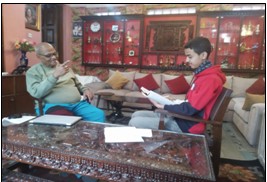
Interviewee:
One of the first hydrologists of Nepal, Mr.AdarshaPrasad Pokhrel has served in diverse field of hydrology including the position of Director General of the Department of Hydrology and Meteorology under the Government of Nepal. He also served as the Chairman of SOHAMNepal (Society of Hydrologists and Meteorologists). Conferred with the title of Engineer Hydrologist, he has worked as a Project Manager of groundwater projects, snow and glacier hydrology, surface water hydrology and many more. He also provided consultancy services to numerous national and international organizations such as UNDP, UNEP, ESCAP, ADB, JICA, etc. After retirement, he provided service to ADAPT (Association for the Development of Environment and People in Transition) in Nepal as its Chairman. He also worked as Deputy Team Leader for a project under the World Bank andprovided consultant service tothe World Meteorological Organization (WMO) in Geneva, Switzerland.
Mr. Pokhrel’s academic background has been very diverse. He has pursued his Master’s in Hydrology and Flood Forecasting at Leningrad State University, St. Petersburg, Russia and the University of California, Davis, US respectively. He spent time learning about Irrigation at Agriculture University (Ruppin), Israel. His subsequent visits include India, Pakistan, Japan, etc. where he developed his professional knowledge.
Interviewer:
Arsh Jha is a senior-year high school student at DAVSushilKediaVishwaBharati Higher Secondary School (DAVSKVB), Jawalakhel, where he pursues a science stream curriculum. He has a deep interest in researching advanced technologies such as space exploration, nanotechnology, quantum computing, etc. and is passionate about discovering their practical applications in real-world scenarios.
Objective of the Interview:
The interview’s objective was to assess the current challenges and advancements in the field of hydrology and meteorology in Nepal and the required strategies for solving climate-related issues such as water resources management. There was a discussion on recent flood problems in Kathmandu Valley and possible reasons.
Interview Report
During my initial period as a hydrologist, hydrological science was in a very infant stage. Engineers and associated professionals made limited use of hydrological parameters in water resources structure designs, highway and bridge designs and other relevant objects. Universal, theoretical, and empirical formulas developed during British rule in India used to be the parameter determination criteria. Everything was to be done manually including the probability curves drawing. The drawn conclusions with such a system were very questionable and sometimes unrealistic. I found many high-cost bridges dilapidated in Assam, India when I worked as an ADB Consultant (SMEC) in 2008. I was given the task of redesigning them for which I, with the help of computer programs and limited data accessibility, revamped the bridges among which some were to be elevated up to 3-4 meters. It was hard to convince the technical bureaucrats at that time but upon reviewing my computer approach, they agreed to it. Now in this computer age, the designs are based on available databases around hydrology and meteorology which has brought a revolution in increasing the quality of hydrological design in the field of water resources. I have experienced several ups and downs in this field which is not possible to include entirely in this interview.
I had the opportunity to work as a consultant with numerous international organizations such as the World Bank, UNDP, UNEP, WMO, ESCAP, ADB, JICA, etc. as well as with many other national consulting services. The experience heavily enlightened me to enhance my knowledge in determining hydrological parameters and preparing project proposals for submission to donor agencies. This resulted in the receipt of financial and technical aid from different international organizations for projects such as the study of hydrology in western Nepal for irrigation purposes supported by the World Bank; the TshoRolpaGLOF Outburst Risk Reduction Project supported by the Netherlands and the Preliminary report, the very first assessment on climate change in Nepal by UNEP. This way it attracted the donor agencies and paved the way for receiving funds to the Nepal Government in the field of hydrology and meteorology. Flood forecasts and meteorological forecasts were made more reliable, resulting in the public and the scientific community taking the forecast data more seriously. Previously, hydrological data was restricted to the public but during my time, it was made possible to buy required data by anyone by just paying a small token price.
Urbanization, especially heavy construction of asphalt roads, has a significant impact on the ecosystem such as deforestation, loss of agricultural land, habitat destruction, biodiversity reduction, etc. Proper planning and its strict enforcement are essential as it is the only way to preserve the ecosystem in the long run.
Climate change is not a myth anymore, it is a fact and posing now a great global challenge, the most affected are developing and poor countries. Climate change is the creation of developed and industrialized countries. However, the developing and poor countries are victimized without any of their contribution to climate change. Hence the developed countries should support the victimized countries and simultaneously decrease their own countries’ emission figures. Nepal’s glaciers are fast receding with the GLOF (Glacier Lake Outbursts Flood) risk being at a crucial stage. Scientists report that the increasing trend in temperature is much more in the Himalayas than in the Terai region. Adaptation and mitigation strategies need to be launched. Water resources protection should be focused and serious concerns be analyzed to combat erratic rainfall and desertification. The Himalayas are the water tower of Asia. They are to be saved for the sake of future generations and the overall protection of humanity and living beings.
International organizations are multi-cultural, multi-ethnic and multi-disciplinary. There you have to work seriously and responsibly to achieve the defined goals in a team spirit. Whereas in Nepal, individuals somehow spend time while forgetting about the responsibilities and team coordination.
First of all, Nepal has to assess its water resource potentiality where it can cooperate with the neighboring countries. Secondly, the benefits need to be analyzed to create a win-win situation. Thirdly, project proposals should be mutually prepared and then diplomatically implemented.
Irrigation projects are haphazardly constructed in many parts of Nepal. The completed projects should be evaluated in terms of benefits from which lessons should be learned. Year-round irrigation systems should be developed and a multi-crops network should be initiated.